
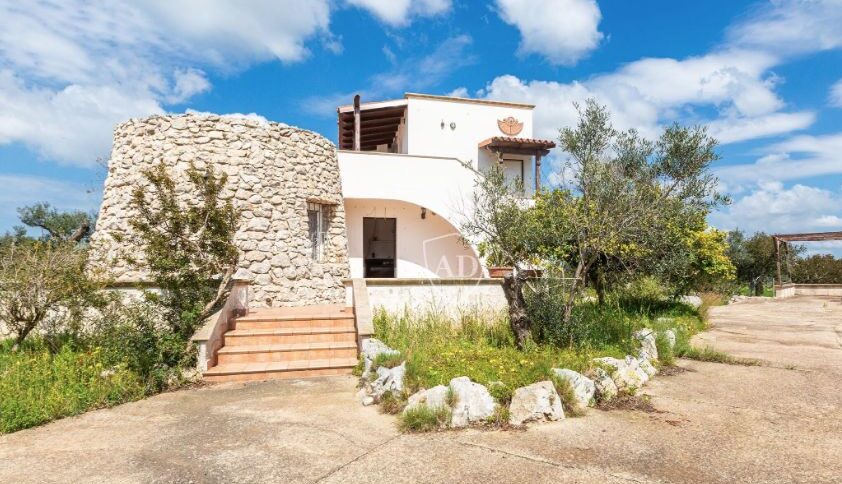
Jenny: te koop een villa met Pajara in Pescoluse. De vraagprijs is € 320.000,00. Pajara’s zijn nogal zeldzaam en je vindt ze alleen zuidelijk van Lecce en dan met name in de buurt van Pescoluse. Ze zijn niet alleen zeldzaam, maar worden ook niet zo vaak te koop aangeboden.
Er zijn 3 slaapkamers en 2 badkamers en het geheel meet 118 M2, terwijl het terrein 5.700 M2 meet. Er kan een zwembad worden toegevoegd en daar reken je gemiddeld voor (afhankelijk van afwerking, poolhouse, buitendouche, afwerking rond het zwembad etc.) rond de € 45.000,00 tot € 50.000.
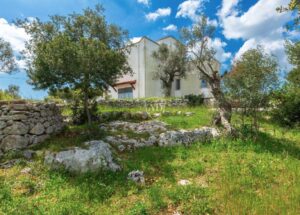
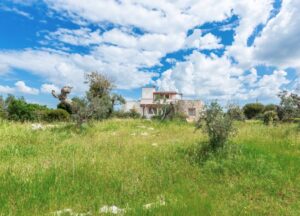
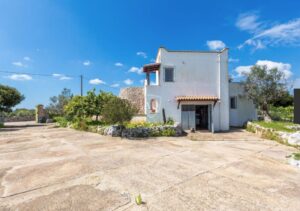
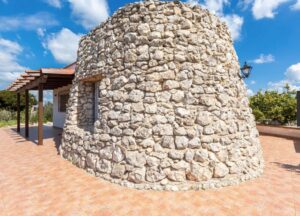
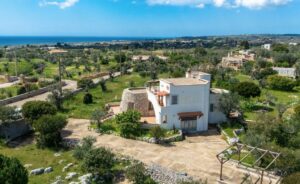
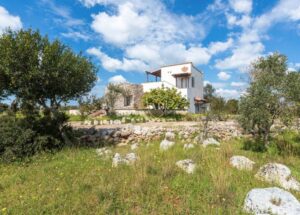
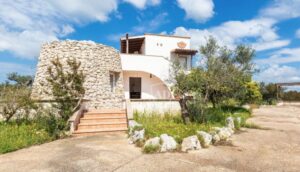
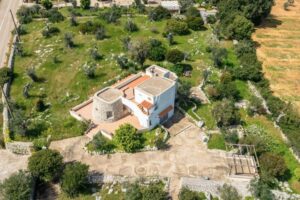
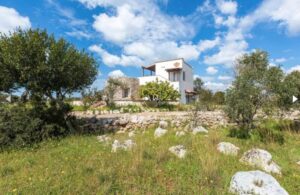
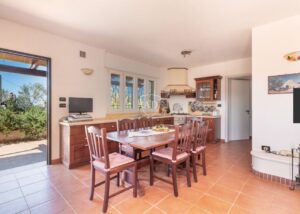
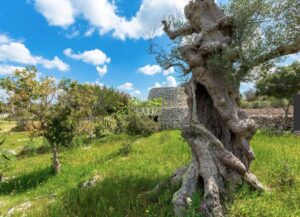
De Makelaar: Het geheel bevindt zich in een mediterrane tuin van 5.700 M2, veel olijven, fruitbomen, er is een begane grond en een 1e verdieping. Dankzij de grote veranda heb je een schitterend gezicht op de zee. Hier vind je een grote woonkeuken en een open haard. Op dezelfde verdieping vind je een badkamer en 2 verfijnde tweepersoons slaapkamers.
De interne trap brengt je naar een volgende tweepersoons slaapkamer met een en-suite badkamer op de eerste verdieping. Vanuit deze kamer een adembenemend gezicht op de zee, dankzij een schaduwrijke pergola.
Iedere kamer in het huis is tot in de puntjes verzorgd met oog voor detail, hetgeen je laat genieten van de houten portico’s en de droogstenen muren tot de weelderige tuin.
Tussen eeuwenoude olijvenbomen, vijgen, aardbeienbomen, mastiekbomen, kun je jezelf onderdompelen in een exceptionele mediterrane oase die je naar de bijzondere pajara leidt. Geheel gemaakt van droogstenen muren. Het gebouw is in een uitstekende staat en is zeer geschikt als een kleine dependance of een wijnkelder.
Er is een garage en een ommuurde veranda.
Het hele huis heeft airco en is aangesloten op de waterleiding en heeft een Fosso Imhoff.
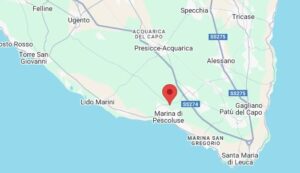
De villa is slechts 4 minuten van het strand van Pescoluse (3 km) gelegen en minder dan 5 km van de plaats Salve.
Marina di Pescoluse is de laatste jaren een zeer populaire strandbestemming, bekend om zijn gouden zandstranden, kristalhelder water, ook met ondiepe delen Reeds sinds verschillende jaren de blauwe vlag vanwege de schoonste zee in Italië en de groene vlag als locatie met de beste stranden en services, geschikt voor families met kinderen.
De aardbeienboom:
de aardbeienboom eten?
De vruchten zijn eetbaar en smaken wat zurig. In het Nederlandse klimaat worden ze vaak niet goed rijp waardoor ze minder geschikt zijn om te eten. In het Middellandse Zeegebied worden de vruchten ook wel verwerkt tot bijvoorbeeld jam. Ondanks de mindere eetbaarheid van de vruchten zijn ze wel erg leuk om te zien.
Mastiekboom
the Pajare Salentine; similar to the Trulli of the Itria Valley but with a cut cone. The first constructions date back to the year 1000, but researchers date them much earlier.
Pajare Salentine

One of the many curiosities that have come down to us is that the doors of the Pajare Salentine were very low, forcing the Saracens to bend down when entering and becoming easy prey for those who had to defend themselves. Inside, there was very little space, since the walls were three to five metres thick and the families were very large, so half of it was used for a bed made of straw in Salento dialect “lattèra” and the little that remained was used for a small bench with pieces of log to sit on “Pasotri”.
In the centre, a large clay plate was used to eat the frugal meal. The menu was always the same, made from boiled wild herbs that they knew well, and grains that they could grow. Our grandparents recount that the beans were eaten with an onion peel as a spoon, because those few pieces of cutlery were not enough for everyone.
Usually, a small oven was built next to the Pajara, made from the same materials as the Pajara, which was used to make bread for the weekly needs and Frise for winter consumption. So as not to waste the heat from the oven, figs, an abundant fruit in Salento, were also dried as a source of food in the cold season.
Around the late 19th century, a variant of the Pajara developed, the “Liàma”. This is still a construction made of dry stone, but rectangular in shape. It was naturally more comfortable and spacious where one could rest on a bed, again made of straw but a real bed. The roof then served to collect rainwater, a treasure that the Salentini knew how to preserve.
Every now and then on the terraces of the Liame we find small basins that farmers used to evaporate sea water to form salt. Of stone constructions in Salento, there are not only the pajare, but also the dry stone walls that have a much older history.
The use of the wall was manifold, firstly to delimit one’s property, and secondly, and much more importantly, to hold back the earth during the winter rains and allow only the water to drain away. Another glimpse of the old Salento that takes us back to the ancient trades where women, men, old men and children contributed with great effort and dedication to building a country that was destined for oblivion, making do with what little the land had to offer and from the earth to resurrect those productspecificatie that, with the complicity of the sun, make us savour the goodness of life and the harmony of nature, which at least they have always respected and loved.
Ga niet zelf contact zoeken met een makelaar, want die registreert je. Dat betekent of niet meer met deze makelaar samenwerken voor jullie of je moet 1,5 maal de provisie betalen en dat wil je ook niet
Niet doen dus!
Of een berichtje via Whatsapp (Tel. +39 3356947038) met vermelding van het nummer betreffende huis.
Of een mailtje: jennystolk2023(@)icloud.com
Contact formulier Villa Lavanda
De huizen van september 2026 en de links ernaartoe. Je klikt op een link en je wordt naar het desbetreffende huis gebracht.
HUIS 1 € 150.000,00 Trullo met zwembad in Carovigno
HUIS 2 € 135.000,00 Trullo en lamia in San Michele Salentino
HUIS 3 € 320.000,00 Witte villa aan zee in Salento
HUIS 4 € 249.000,00 Stenen Villa in Ostuni
HUIS 5 € 365.000,00 Trullo + Lamia + zwembad in Ostuni
HUIS 6 € 295.000,00 Groep stenen Trulli in Martina Franca
HUIS 7 € 370.000,00 Fraaie roze villa in Oria
HUIS 8 € 975.000,00 Grote stenen Villa in de Selva di Fasano
HUIS 9 € 198.000,00 Trullo en Lamia in Putignano
HUIS 10 € 550.000,00 Boetiekhotel in Galatina
HUIS 11 € 360.000,00 Villa in het bos in Manduria
HUIS 12 € 460.000,00 Villa met zwembad in San Michele Salentino
HUIS 13 € 390.000,00 Villa heel groot zwembad in Oria
HUIS 14 € 320.000,00 Pajara zeezicht in Pescoluse
HUIS 15 € 125.000,00 Stenen Villa in Canale di Pirro
HUIS 16 € 150.000,00 Tweekamerappartement in Ostuni
HUIS 17 € 330.000,00 Stadspaleis in Martina Franca
HUIS 18 € 630.000,00 Villa met zwembad in Carovigno
HUIS 19 € 365.000,00 Gerestaureerde trulli en lamia in San Michele Salentino
HUIS 20 € 320.000,00 Stenen villa met zeezicht in Torre Vado
HUIS 21 € 265.000,00 Witte villa met zeezicht in Ostuni
HUIS 22 € 375.000,00 Grote villa geschikt voor B&B in Corigliano d’Otranto
HUIS 23 € 310.000,00 Trulli en Lamia’s in Ceglie Messapica
HUIS 24 € 329.000,00 Villa met Zwembad in Fasano
HUIS 25 € 248.000,00 Villa met zwembad in San Vito dei Normanni
HUIS 26 € 398.000,00 Designvilla met tennisbaan in Fasano
HUIS 27 € 330.000,00 Stenen villa opbouwzwembad in Cisternino
HUIS 28 € 190.000,00 Villa op het platteland in Ceglie Messapica
HUIS 29 € 275.000,00 Grote Villa in Cisternino
HUIS 30 € 500.000,00 Trullo en Lamia in Cisternino
HUIS 31 € 180.000,00 Trullo Saraceno in Ostuni
HUIS 32 € 385.000,00 Villa met zwembad in Ostuni
HUIS 33 €145.000,00 Zalmrose villa in San Vito dei Normanni
HUIS 34 € 66.000,00 Verhuurparel in Ceglie Messapica
HUIS 35 € 185.000,00 Groepje Trulli in Ceglie Messapica
HUIS 36 € 330.000,00 Villa met zwembad in Ostuni
HUIS 37 € 345.000,00 Trullo en Lamia met zwembad in Ceglie Messapica
HUIS 38 € 750.000,00 Villa met Zeezicht in Carovigno
HUIS 39 € 165.000,00 Villa met 3 slaapkamers Ostuni
HUIS 40 € 720.000,00 Trulli, lamia’s en zwembad in Ceglie Messapica
HUIS 41 € 155.000,00 Villa Panoramisch uitzicht in Martina Franca
HUIS 42 € 285.000,00 Trullo en Lamia in Castellana Grotte
HUIS 43 € 629.000,00 Villa met groot zwembad in San Michele Salentino
HUIS 44 € 695.000,00 B&B of Hotel in Gallipoli
HUIS 45 € 315.000,00 Complex Trulli en Lamia in Cisternino
HUIS 46 € 180.000,00 Trullo met Zeezicht in Cisternino
HUIS 47 € 340.000,00 Groepje trulli en lamia in Locorotondo
HUIS 48 € 330.000,00 Lamie en Trulli in Ostuni
HUIS 49 € 330.000,00 Villa Canale di Pirro in Canale di Pirro
HUIS 50 € 340.000,00 Villa aan Zee in Salve
HUIS 51 € 178.000,00 Villa met Zeezicht in Diso
HUIS 52 € 195.000,00 Villa aan Zee met project zwembad
HUIS 53 € 490.000,00 2 villa’s aan Zee in Pescoluse
HUIS 54 € 340.000,00 Villa 2 verd. en zwembad in Ostuni
HUIS 55 € 345.000,00 Villa biol.olijfgaard+Zwemb. in de Itrie Vallei
HUIS 56 € 500.000,00 Villa met biol.wijngaard in Pescoluse
HUIS 57 € 530.000,00 Villa aan de kust in Salve/Marina di Pescoluse
HUIS 58 € 430.000,00 Villa met zwembad in Carovigno
HUIS 59 € 270.000,00 Trullo met Zwembad en olijfgaard M.F./C.M.
HUIS 60 € 495.000,00 Villa met Zwembad in Tuglie
HUIS 61 € 390.000,00 Villa in Pietra Leccese in Torre Vado
HUIS 62 € 530.000,00 Smaakvolle Villa in Oria
HUIS 63 € 180.000,00 Saraceense Trullo in Ostuni
HUIS 64 € 690.000,00 Bijzondere Villa in Nardò
HUIS 65 € 750.000,00 Complex van Trulli in Martina Franca
HUIS 66 € 720.000,00 Villa met vele extra’s. in Polignano a Mare
HUIS 67 € 185.000,00 Lamia met 2 slaapkamers in Martina Franca
HUIS 68 € 799.000,00 Grote villa met zwembad in Polignano a Mare
HUIS 69 € 598.000,00 Lopende B&B in Alessano
HUIS 70 € 249.000,00 Villa aan de kust in S. Pietro Vernotico
HUIS 71 € 470.000,00 Bestaande B&B in Lecce
HUIS 72 € 255.000,00 Bestaande B&B in Avetrano
HUIS 73 € 690.000,00 Landgoed groot zwembad in Sannicandro di B.
HUIS 74 € 340.000,00 Villa 5 slaapk. 5 badk. in Matino
HUIS 75 € 390.000,00 Villa 4 slaapk.zwembad in Carovigno
Bedenk dat dit een algemeen samengestelde portefeuille is. Als ik voor jou/jullie ga zoeken, stem ik dat af op je wensen qua type huis met/zonder zwembad en natuurlijk ook jouw prijsklasse.
Natuurlijk betalen we nooit de vraagprijs, daarover ga ik voor je onderhandelen. Vanaf het uitbrengen van het bod duurt het gemiddeld 2 maanden voor we naar de notaris gaan, dus nog ruim op tijd om nog voor de jaarwisseling of in het volgende voorjaar al in je nieuwe huis te zitten.
De 7% flattax regeling krijg je over je Nederlandse of Vlaamse pensioen en een aantal andere inkomensbestanddelen, mits je permanent gaat wonen in een gemeente met minder dan 30.000 inwoners.
Dat betekent dat dit kan o.m. in Noci, Pulsano, Polignano A Mare, Pezzo di Greco, Salve, San Pietro Vernotico, San Michele Salentino, San Vito dei Normanni, Torre Canne, Torre Santa Suzanna, Sava, Villa Castelli, Castrignano del Capo, Cutrufiano, Castellana Grotte, Cisternino, Carovigno (+ Specchiolla, + Torre S. Sabina, Ceglie Messapica, Lizzano, Leverano, Locorotondo, Latiano, Manduria (nog net) Messanga, Oria, Putignano, Ostuni
en niet kan in Francavilla Fontana, Fasano incl. Saveletri, Lecce, Monopoli, Martina Franca.